

Azuska

Blog

Your blog category

EFT tapping for emotional overwhelm
Blog

EFT for Moments When Emotions Feel Too Much

EFT for Moments When Emotions Feel Too Much EFT tapping for emotional overwhelm can feel like a gentle support when emotions do not ease their way in. Sometimes they rise suddenly, filling your chest, tightening your throat, and fogging your thoughts before you have time to understand what is happening. You may not even know what triggered them. All you know is that something inside feels too full, too loud, and too much to carry quietly anymore. In moments like these, being told to calm down, breathe, or think positively can feel frustrating, even isolating. What you are often needing is not control, but release. A Gentle Way to Meet Big Feelings This is where EFT, or Emotional Freedom Technique, can meet you gently. EFT is not about fixing yourself or analysing your feelings until they make sense. It’s a simple, body-based tool that helps your nervous system let go of emotional build-up in real time. When emotions feel overwhelming, EFT works with your body rather than against it, allowing intensity to soften without forcing it away. Why Emotional Overwhelm Builds Up Most emotional overwhelm doesn’t come from one single event. It accumulates slowly. The feelings you didn’t have time to process. The reactions you swallowed because you had to keep going. The stress you told yourself you’d deal with later. Your body remembers all of it. Even when your mind moves on, your nervous system keeps the score. Over time, that stored emotional energy can show up as anxiety, irritability, sudden tears, deep fatigue, or the unsettling sense of always being on edge without fully knowing why. How EFT Supports the Nervous System EFT works because it speaks the language of the body. By gently tapping on specific acupressure points while bringing attention to what you’re feeling, you send a calming signal to your nervous system. In that moment, you are letting your body know, “I can see this feeling, and I am safe enough to stay with it.” That sense of safety is what allows emotions to move instead of staying stuck. You’re not reliving the past or digging for explanations. You are simply giving what is present a little space to be seen, and often that is enough for the release to begin. You Do Not Need Perfect Words When you use EFT during moments of emotional overwhelm, you don’t need perfect words. You don’t need clarity. You only need honesty. You might notice a heaviness in your chest, a knot in your stomach, or a buzzing restlessness in your body. As you tap, you gently name what’s there—this tightness, this sadness, this pressure, this overwhelm. You are not trying to fix the feeling instantly or force it to disappear. You are reminding your body that it does not have to carry everything in silence anymore. The Quiet Shift That Often Follows What often surprises people is how quickly the intensity begins to shift. Sometimes the emotion softens. Sometimes it moves to a different place in the body. Sometimes it simply feels less urgent. Even when the situation hasn’t changed, your relationship to the emotion does. You feel more grounded, more present, more able to respond instead of react. That is the quiet power of EFT. It does not take your emotions away. It helps them move through with more ease. A Practice That Fits Into Real Life One of the reasons EFT is such an accessible everyday tool is that it fits into real life. You can use it when anxiety spikes unexpectedly, before a difficult conversation, after a long emotionally heavy day, or at night when your mind won’t settle. You don’t need privacy, equipment, or extended time. Even a few minutes of tapping can create enough space for emotions to settle before they build into burnout, resentment, or chronic stress. What EFT Is Not It’s also important to understand what EFT is not. It’s not about bypassing pain or pretending everything is fine. It’s not about forcing yourself into calm. EFT respects the intelligence of your emotions. It allows them to be felt without overwhelming your system. With time, this can build a quiet trust within yourself. You begin to realise that no emotion is too much when you know how to meet it with gentleness. Returning to Yourself If this speaks to something you have been holding quietly, the Self Healing Retreat at Azuska offers a supportive space to go deeper. Through healing practices, emotional release work, and a more nurturing rhythm, it helps you reconnect with yourself in a way that feels safe, grounded, and truly restorative. Sometimes healing begins not by pushing through, but by finally giving yourself permission to soften. Disclaimer: Our content is not intended to provide medical advice or diagnosis of individual problems or circumstances, nor should it be implied that we are a substitute for professional medical advice. Users /readers are always advised to consult their Healthcare Professional prior to starting any new remedy, therapy or treatment. Azuska– Goa accepts no liability in the event you, a user of our website and a reader of this article, suffers a loss in any way as a result of reliance upon or inappropriate application of the information hosted on our website. PrevPrevious

Ayurvedic hair care everyday life
Blog

Bringing Ayurvedic Hair Wisdom Into Everyday Life

Bringing Ayurvedic Hair Wisdom Into Everyday Life Ayurveda does not focus on perfect routines or expensive products for hair care. It begins with recognising that your hair responds to how you live, eat, rest, and cope each day. Most people approach hair concerns with urgency. You search for solutions, switch products, try treatments, and hope for quick improvement. Yet Ayurveda invites a different conversation. It asks you to slow down and listen. Because You cannot fix hair health overnight. You support hair health gently, day by day. In Ayurveda, your hair remains deeply connected to your overall health. It reflects digestion, stress levels, sleep quality, circulation, and emotional balance. True hair care does not begin in the bathroom. It begins in how you live your life. How Ayurveda Views Hair Health Ayurveda sees hair as a byproduct of nourishment. When digestion is steady, nutrients are absorbed well and circulated effectively, hair receives what it needs to grow strong and resilient. When digestion weakens, stress rises, or routines become irregular, hair is often one of the first places imbalance shows up. Each body carries a unique constitution, which influences hair texture, thickness, and scalp tendencies. Some experience dryness and breakage. Others notice oiliness or inflammation. These differences are not problems to correct. They are signals guiding you toward balance. Ayurveda does not treat hair in isolation. You care for hair by supporting the whole body. Why Hair Suffers in Modern Lifestyles Hair health often declines not because of neglect, but because of overload. Long workdays, emotional pressure, skipped meals, late nights, and constant stimulation slowly drain the body’s reserves. Even when you are doing your best, the pace of modern life can quietly exhaust nourishment pathways. Stress plays a powerful role here. When the nervous system remains in a constant state of alert, circulation shifts away from growth and repair. Lack of rest and rhythm weakens your hair, not lack of effort. Ayurveda does not view this as failure. It sees it as information. Simple Daily Habits That Support Hair Health Ayurvedic hair care is designed to be realistic. Small, consistent actions matter more than elaborate rituals done occasionally. Regular meals support digestion. Hydration supports circulation. Gentle scalp oiling calms the nervous system and nourishes the roots. Mindful washing prevents unnecessary strain on fragile strands. You do not need to make these practices perfect, just kind and repeatable. The Role of the Nervous System in Hair Wellness Your hair grows better when you improve circulation, and you improve circulation when you relax. When stress dominates, the body prioritises survival over repair. This is why hair concerns often appear alongside anxiety, burnout, or emotional fatigue. Ayurveda reminds us that calming the nervous system is not optional self care. It is foundational care. Gentle routines, slower evenings, reduced over-stimulation, and moments of quiet all create conditions where the body feels safe enough to nourish hair again. Caring for your nervous system is caring for your hair. Nourishing Hair Through Digestion Ayurvedic nourishment focuses on digestion rather than supplementation. Warm, freshly prepared meals are easier to absorb and more supportive than cold or processed foods. Adequate protein and healthy fats help maintain hair strength, while overly restrictive diets often weaken it. Rather than chasing superfoods, Ayurveda encourages consistency. When the body is fed regularly and calmly, your body naturally nourishes your hair. From Retreat Wisdom to Daily Life Retreats often help people experience what balance feels like again. The challenge is carrying that feeling home. Ayurvedic hair wisdom is not meant to stay confined to treatments or special settings. It is meant to blend into ordinary days. Simplifying routines, choosing consistency over intensity, and listening to seasonal changes allow hair care to become sustainable. When you stop forcing results and start supporting balance, hair responds in its own time. Letting Hair Care Become a Gentle Ritual Healthy hair does not grow from urgency or pressure. It grows from patience, nourishment, and steadiness. You do not need to do everything. You need to do a few things with care. When hair care becomes part of how you eat, rest, and regulate stress, confidence returns quietly. Not because something was fixed, but because balance was restored. For those seeking deeper guidance and personalised Ayurvedic support, the Lustrous Locks Ultimate Hair Care Retreat at Azuska Wellness Clinic offers an immersive experience designed to restore hair health by supporting the body, mind, and nervous system together. Hair remembers how it feels to be cared for, and with gentle consistency, it responds. Disclaimer: Our content is not intended to provide medical advice or diagnosis of individual problems or circumstances, nor should it be implied that we are a substitute for professional medical advice. Users /readers are always advised to consult their Healthcare Professional prior to starting any new remedy, therapy or treatment. Azuska– Goa accepts no liability in the event you, a user of our website and a reader of this article, suffers a loss in any way as a result of reliance upon or inappropriate application of the information hosted on our website. PrevPrevious

walking as medicine for heart health
Blog

Walking as Medicine: Why It’s Still One of the Best Heart Health Habits

Walking as Medicine: Why It’s Still One of the Best Heart Health Habits In a culture that celebrates pushing harder, walking can feel too simple to matter. But the heart isn’t asking for intensity. It’s asking for consistent movement that lowers strain and restores rhythm. Walking meets the body where it is gentle, sustainable, and deeply protective over time. Why the Heart Loves Walking The heart is a muscle, and like all muscles, it responds best to movement that is steady and repeatable. Walking improves circulation without sudden spikes in effort. Blood flows more smoothly, oxygen delivery improves, and the heart learns to work efficiently rather than forcefully. Over time, walking supports healthier blood pressure, encourages balanced cholesterol levels, and strengthens the heart in a way that feels sustainable. There is no shock to the system, no need for recovery days from exhaustion. Instead, the heart adapts gently, building resilience through consistency. Walking and Stress: The Heart Connection Stress directly impacts heart health Chronic stress keeps the nervous system in a heightened state, raising heart rate and blood pressure. Walking helps interrupt this pattern by signaling safety to the body. Rhythmic movement lowers cortisol The repetitive motion of walking calms stress hormones. This matters because elevated cortisol over time strains the heart just as much as physical inactivity. The nervous system settles before the heart does When the mind slows, the heart follows. Walking creates this shift naturally, without effort or technique. A calmer body protects the heart Heart health is not only about movement. It is also about reducing internal pressure. Walking does both at once. Why Walking Is Sustainable for Most Bodies Walking works with the body rather than pushing its limits. It’s low impact, adaptable to different fitness levels, and easy to return to after a break. Because it’s simple and accessible, it removes much of the resistance that keeps people from starting. Consistency Over Intensity Heart health builds through regular movement the body can rely on, not occasional bursts of effort. Short daily walks offer more lasting protection than intense workouts done inconsistently, strengthening the heart quietly over time. Making Walking a Heart Healthy Ritual Mindful walking: Walking without rushing or multitasking allows the heart to slow into a natural rhythm. Post meal walks: Gentle movement after eating supports circulation and metabolic balance, easing the load on the heart. Walking in nature: Natural environments further reduce stress, offering added cardiovascular protection. Walking without distractions: Leaving the phone behind even occasionally allows the nervous system to fully settle. When walking becomes a ritual rather than a task, it stops feeling like exercise and starts feeling like care. Walking in a Wellness or Retreat Environment In a calm setting, walking takes on a different quality. There is less noise, fewer demands, and more space to listen to the body. Fresh air, intentional pacing, and reduced mental load allow the heart to experience movement without urgency. In wellness environments, walking is not rushed or goal driven. It becomes part of a larger rhythm of rest, nourishment, and recovery, supporting heart health in a deeply integrated way. Returning to What the Body Has Always Known Sometimes the most effective medicine is the simplest one. Walking reminds the heart how to move without strain, how to respond without pressure, and how to grow stronger through consistency rather than force. You do not need extreme workouts to protect your heart. You need movement you can return to again and again. If you are looking to support your heart in a more holistic and sustainable way, the Cardiovascular Health Retreat at Azuska offers a guided approach that integrates gentle movement, stress regulation, nutrition, and lifestyle support to help your heart thrive long term. The heart does not need to be pushed to become stronger. It needs movement it can trust. Start where you are. Walk at your pace. Let strength build quietly, one step at a time. Disclaimer: Our content is not intended to provide medical advice or diagnosis of individual problems or circumstances, nor should it be implied that we are a substitute for professional medical advice. Users /readers are always advised to consult their Healthcare Professional prior to starting any new remedy, therapy or treatment. Azuska– Goa accepts no liability in the event you, a user of our website and a reader of this article, suffers a loss in any way as a result of reliance upon or inappropriate application of the information hosted on our website. PrevPrevious

gentle juicing for digestion and detox
Blog

Gentle Juicing for Days When the Body Feels Overloaded

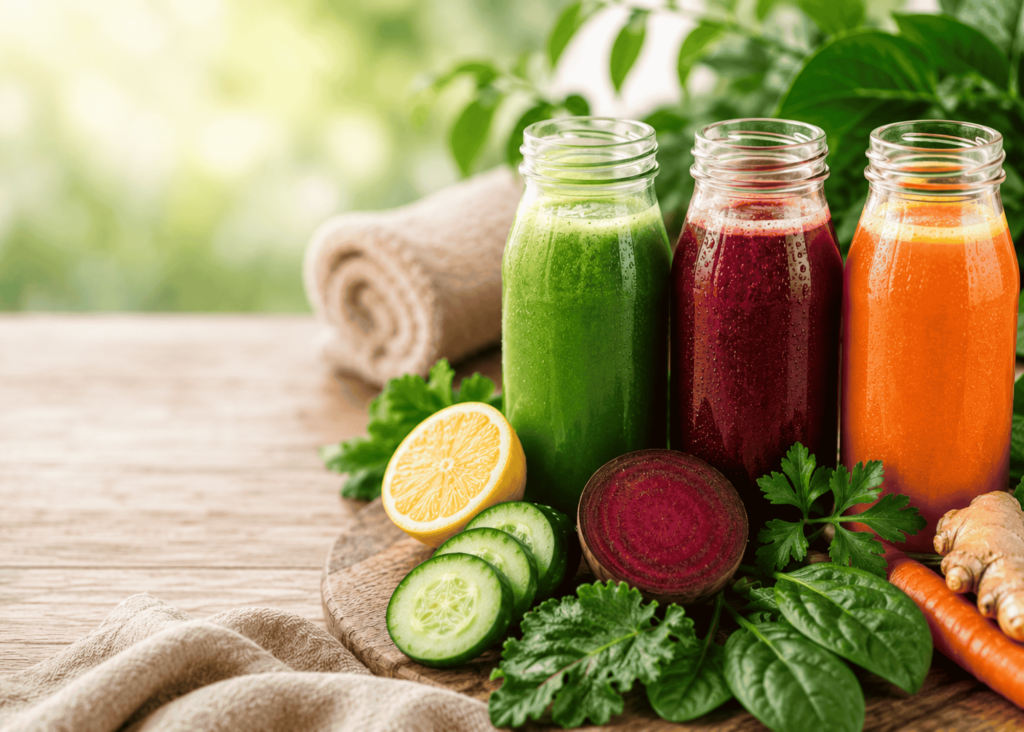
Gentle Juicing for Days When the Body Feels Overloaded There are moments when eating feels heavy, thinking feels slow, and the body seems to lag behind your intentions. Even simple tasks can feel heavier than they should. You may still be functioning, still moving through the day, yet something feels congested — physically, mentally, emotionally. In these moments, gentle juicing for digestion and detox can offer a simple way to ease the load without forcing the body into drastic change. This kind of overload does not always come from food alone. It builds from travel, long periods of stress, emotional strain, irregular routines, and the constant demand to stay switched on. The digestive system often reflects this first. Appetite shifts. Digestion slows. The body begins to ask quietly for less complexity and more support. In these moments, the body is not asking to be fixed or disciplined. It is asking for relief. Gentle juicing for digestion and detox can become a way of responding to that request — not as a cleanse or strict reset, but as a temporary easing of the digestive burden. When used thoughtfully, gentle juicing for digestion and detox offers a pause that allows the system to reset without force, and nourishment to arrive without effort. What Gentle Juicing Actually Is Gentle juicing is not about control or correction. It is a short, supportive practice designed to ease the body when it feels overloaded. It focuses on nourishment that is light, hydrating, and easy to absorb, without asking the digestive system to work too hard. This approach is flexible and responsive. Juices are taken for a brief period, often alongside rest and quiet, and adjusted based on hunger, energy, and comfort. The intention is not to suppress appetite or override the body’s signals, but to listen more closely to them. What gentle juicing is not matters just as much. It is not fasting. It is not an extreme detox. And it is not driven by weight loss or restriction. It is simply a way of creating space when the body needs a break. When the Body May Benefit From Gentle Juicing Gentle juicing is most helpful when the body signals overload rather than hunger for heaviness: Sluggish or uncomfortable digestion: When meals feel heavy, bloating persists, or digestion feels slow, lighter nourishment can reduce strain and bring relief. Bloating or internal fullness: A sense of being “full” without appetite often reflects digestive fatigue rather than overeating. Low or inconsistent appetite: When solid food feels unappealing, juices offer nourishment without forcing intake. Mental heaviness or fog: Overwhelm often shows up in both the gut and the mind. Simplifying intake can ease both. Craving lighter nourishment: The body sometimes naturally asks for fluids, freshness, and ease rather than density. These signals are not problems to correct. They are communications to respond to with care. How Gentle Juicing Supports the Body When practiced with intention, gentle juicing supports the body in quiet but meaningful ways. It gives digestion a temporary rest, allowing energy to be redirected toward repair and balance. Nutrients are delivered in a form that requires less effort to absorb, supporting hydration and cellular nourishment. Equally important, gentle juicing reduces the mental load around food. Decisions soften. Planning eases. The body is no longer negotiating what or how much to eat, which creates a sense of calm that extends beyond digestion. This simplicity often brings emotional steadiness along with physical relief. What Makes Juicing Gentle and Safe Gentle juicing is defined by how it is approached, not just what is consumed: Fresh, seasonal ingredients: Using produce that is in season supports digestion and aligns with the body’s natural rhythms. More vegetables than fruit: This keeps juices nourishing without overwhelming blood sugar. Room temperature or lightly warmed juices: Especially helpful when digestion feels sensitive or cold. Short duration: Gentle juicing is meant for brief periods, not extended fasting. Listening to hunger cues: Hunger is not ignored. Juicing adapts to what the body asks for. What makes juicing not gentle is ignoring hunger, extending the practice too long, chasing dramatic outcomes, or treating it as a test of willpower. When discipline replaces listening, the body tightens instead of softening. Why Gentle Juicing Feels Different in a Retreat Setting Context changes everything. In a retreat environment, gentle juicing is supported by rest, calm routines, and reduced responsibility. The nervous system is no longer pulled in different directions, and the body is observed and supported rather than pushed. Paired with hydration, quiet, and guided care, juicing becomes part of a holistic pause that allows the body to reset rather than perform. Choosing Ease Over Effort Juicing is not about fixing the body. It is about giving it space to recover when it has been carrying too much. Overload is not a lack of discipline, but a natural response to stress, travel, and constant stimulation. Choosing ease allows digestion to rest and the nervous system to settle. Sometimes the most supportive thing you can do is stop pushing and allow the body to recover. Disclaimer: Our content is not intended to provide medical advice or diagnosis of individual problems or circumstances, nor should it be implied that we are a substitute for professional medical advice. Users /readers are always advised to consult their Healthcare Professional prior to starting any new remedy, therapy or treatment. Azuska– Goa accepts no liability in the event you, a user of our website and a reader of this article, suffers a loss in any way as a result of reliance upon or inappropriate application of the information hosted on our website. PrevPrevious

enemas in ancient cleansing practices
Blog

Enemas Explained: Ancient Cleansing Practices and Their Purpose

Enemas Explained: Ancient Cleansing Practices and Their Purpose The word Enema often brings up discomfort, hesitation, or uncertainty. Many people feel unsure even reading the word, shaped by modern misconceptions, extreme detox narratives, or embarrassment around digestive health. This reaction is understandable. In today’s wellness space, enemas are often discussed without context, history, or restraint. But enemas are not a modern trend, nor were they ever intended as aggressive cleanses. They are among the oldest supportive practices used in traditional healing systems, developed through careful observation of how the body eliminates waste. When understood in their proper context, enemas are not about forcing the body to detox. They are about assisting elimination when natural processes slow down, always with intention, moderation, and care. What Is an Enema? An enema is a therapeutic practice in which a liquid is gently introduced into the lower bowel to support elimination. The purpose is not to cleanse the entire digestive tract, but to help release stagnation in the colon when bowel movement is sluggish or incomplete. Traditionally, enemas were used to relieve discomfort, reduce internal congestion, and support the body’s natural rhythm of elimination. They were never meant to override the body’s intelligence, but to assist it when needed. When used appropriately, enemas are supportive tools, not interventions meant for frequent or unsupervised use. Enemas in Ancient Healing Traditions In ancient wellness systems, enemas were never practiced in isolation. In Ayurveda, they are known as Basti, one of the most important therapeutic procedures used to balance the body, especially when elimination becomes impaired. These practices were carefully timed, personalised, and always paired with dietary guidance, rest, hydration, and internal preparation. Cleansing in these traditions was seasonal and intentional, not constant. Enemas were used as part of a broader healing approach that respected the body’s cycles and capacity. Their role was to support the digestive system when natural elimination was not sufficient, not to create dependency or extreme purification. The Purpose Behind Enemas Enemas were designed to support the body, not shock it. Their purpose becomes clear when viewed through a therapeutic lens: Supporting natural bowel movement When digestion slows or waste becomes stagnant, the body may struggle to eliminate efficiently. Enemas gently assist this process, reducing strain without forcing movement. Reducing internal stagnation Prolonged stagnation in the colon can contribute to discomfort, heaviness, and digestive imbalance. Enemas help clear this buildup so the body can reset its natural rhythm. Easing digestive discomfort When bloating, fullness, or irregularity persists, enemas can relieve pressure and support comfort, especially during structured cleansing or therapeutic care. Preparing the body for deeper healing practices In traditional systems, enemas were often used before or alongside other therapies, allowing the body to respond more effectively once elimination pathways were clear. The focus was always assistance, not control. Enemas were never meant to promise dramatic transformation, only to support what the body was already trying to do. Enemas Within a Guided Wellness Setting Context is essential. Enemas are most effective and safest when used within a guided wellness program rather than as a standalone or self directed practice. Traditional systems emphasised professional supervision, individual assessment, and appropriate timing. In a structured setting, enemas are combined with supportive nutrition, hydration, rest, and emotional calm. Frequency is limited, and the body’s response is closely observed. This approach ensures that enemas complement natural processes instead of disrupting them. Addressing Common Myths and Concerns Most fears around enemas come from misunderstanding rather than from how the practice was traditionally used. Myth: Enemas create dependency Fact: When used occasionally and with guidance, enemas support elimination without weakening natural bowel function. Problems arise from frequent or unsupervised use, not from the practice itself. Myth: Enemas are harsh or extreme Fact: Traditional enemas were gentle, carefully timed, and personalised. They were meant to assist the body, not force cleansing. Myth: Enemas are painful Fact: When administered slowly and correctly, discomfort is usually minimal. Traditional practice prioritises ease and stops at the first sign of strain. Myth: Enemas detox the whole body Fact: Enemas work only on the lower bowel. They support elimination locally and do not replace digestion or overall detoxification. Myth: Enemas are safe for everyone Fact: Enemas are not universal. Certain health conditions require caution and professional guidance. When used with respect and context, enemas were always intended as supportive tools, not extreme interventions. Who May Benefit and Who Should Avoid Enemas may be beneficial during specific therapeutic or seasonal cleansing programs, especially when digestion is sluggish or elimination feels incomplete. However, they are not suitable for everyone. Individuals with certain digestive conditions, during pregnancy, or with specific medical concerns should avoid enemas unless guided by a qualified practitioner. Responsible use always begins with understanding personal suitability and seeking professional advice. Where Cleansing Meets Careful Wisdom Ancient cleansing practices were built on patience, observation, and respect for the body’s rhythms. Enemas were never about urgency or extremes. They were tools used sparingly, thoughtfully, and within a larger system of care. Understanding enemas through this lens removes fear and restores perspective. Cleansing was never meant to be dramatic. It was meant to be supportive. For those interested in experiencing traditional cleansing within a safe, guided environment, the Ayurveda Detox Retreat at Azuska, Goa offers structured care rooted in classical Ayurvedic principles. Here, cleansing practices are introduced with education, supervision, and respect for individual needs, allowing the body to release gently and restore balance without force. Sometimes, clarity comes not from doing more, but from understanding why a practice exists and choosing it with care. Disclaimer: Our content is not intended to provide medical advice or diagnosis of individual problems or circumstances, nor should it be implied that we are a substitute for professional medical advice. Users /readers are always advised to consult their Healthcare Professional prior to starting any new remedy, therapy or treatment. Azuska– Goa accepts no liability in the event you, a user of our website and a reader of this article, suffers a loss

hidden stress women carry
Blog

The Hidden Stress Women Carry: Why Women Experience Stress Differently

The Hidden Stress Women Carry: Why Women Experience Stress Differently There is a particular kind of tiredness many women learn to live with. Not the kind that follows a long day, but the kind that lingers even after rest. You wake already bracing. Your mind is alert before your body feels ready. By the time the day begins, you are carrying more than you realised. This is the hidden stress women hold not because they are incapable of coping, but because life often expects them to. It accumulates quietly through constant responsibility, emotional vigilance, and the unspoken pressure to stay steady no matter what is happening beneath the surface. Over time, stress stops feeling temporary. It begins to feel normal. The body does not collapse in response. It adapts. Muscles tighten. Energy flattens. Sensations dull just enough to keep going. From the outside, it can look like resilience. Inside, it often feels like survival. This stress is not imagined. It is not a personal weakness. It is the nervous system responding exactly as it was designed to a life that asks many women to carry more than is sustainable for too long. The Invisible Load Women Carry Much of women’s stress does not come from tasks alone. It comes from holding. You carry mental planning that never turns off. Emotional regulation for families, workplaces, relationships. Anticipation of needs before they are spoken. The quiet responsibility of keeping things running smoothly. This invisible labour is rarely acknowledged, yet it consumes energy every day. Stress is not only about what you do, it is about what you carry internally while doing it. Why Women Experience Stress Differently Women do not experience stress in isolation from their bodies or their roles. Stress moves through layered systems, biological, emotional, and social, that interact continuously. Hormonal rhythms shape the stress response Hormones influence how stress is processed and released. Fluctuations across menstrual cycles, pregnancy, postpartum years, and menopause change how the nervous system reacts to pressure. What feels manageable one week may feel overwhelming the next, not because you are inconsistent, but because your body is responding intelligently to internal shifts. Stress hormones interact differently in women Cortisol does not act alone. It interacts with estrogen and progesterone, which can amplify emotional sensitivity and fatigue under prolonged stress. This means women often feel stress more deeply, even when functioning outwardly. Emotional responsibility is often internalised From a young age, many women are taught to manage feelings — their own and everyone else’s. Stress is absorbed rather than expressed. Care is offered before it is asked for. Over time, this becomes a quiet, constant load. Women are not more fragile. They are responding to systems that ask them to hold more. How Hidden Stress Shows Up in the Body When stress is ongoing and unexpressed, the body adapts and those adaptations show up subtly. Sleep becomes lighter or restless. Digestion feels unsettled. Hormonal symptoms fluctuate. Fatigue lingers even after rest. Emotionally, you may feel irritable, numb, or disconnected from things that once felt easy. These are not failures of resilience. They are signals of accumulation. Your body is not breaking down. It is responding to sustained demand. Why “Just Relax” Doesn’t Work Stress does not ease when it is dismissed. Being told to “just relax” or “slow down” often adds another burden, the pressure to cope better while still carrying everything inside. Rest without emotional safety does not truly restore, and pauses taken without permission remain tense. Stress begins to release only when it is acknowledged with understanding, not minimised, explained away, or compared. Gentle Ways Women Can Begin Releasing Stress Releasing stress does not mean adding more tasks. It means creating conditions where the nervous system can soften. Slowing the nervous system rather than the schedule Small moments of stillness — breath, grounding, quiet awareness — help the body exit constant alertness. Calm is not inactivity. It is regulation. Creating boundaries that protect energy Saying no, asking for support, and stepping back are not withdrawals. They are acts of self-preservation that reduce emotional overload. Allowing rest without justification Rest does not need to be earned. When rest is permitted without guilt, the body begins to repair more deeply. Returning to the body through gentle practices Movement, touch, breath, and presence reconnect you to yourself beyond roles and responsibilities. Being in spaces where nothing is expected of you Stress releases more easily when you are supported rather than evaluated, held rather than relied upon. These are not fixes. They are openings. When Care Replaces Endurance Feeling tired is not a flaw. It is often the body’s honest response to carrying more than is visible. When stress is acknowledged instead of pushed through, the nervous system begins to soften, and space for real rest returns. For those who feel ready to pause more deeply, the De-Stress Retreat at Azuska Wellness Clinic offers a quiet, supportive environment to release accumulated tension and reconnect with yourself, without pressure, performance, or explanation. Sometimes the most meaningful healing begins when you stop holding everything alone. Disclaimer: Our content is not intended to provide medical advice or diagnosis of individual problems or circumstances, nor should it be implied that we are a substitute for professional medical advice. Users /readers are always advised to consult their Healthcare Professional prior to starting any new remedy, therapy or treatment. Azuska– Goa accepts no liability in the event you, a user of our website and a reader of this article, suffers a loss in any way as a result of reliance upon or inappropriate application of the information hosted on our website. PrevPrevious

can pre diabetes be reversed without medication
Blog

Can Pre-Diabetes Be Reversed Without Medication?

Can Pre-Diabetes Be Reversed Without Medication? There are moments in life when the body interrupts the pace you have been keeping. A routine blood test. An unfamiliar number. A sentence from a doctor that lingers longer than expected. When this happens, the question often rises quietly but urgently: can prediabetes be reversed without medication? Prediabetes often arrives not as a symptom you feel, but as information that changes how you listen to your body. What follows is usually noise. Advice. Fear. Pressure to restrict. Preparation for what might come next. The focus shifts quickly to what could go wrong instead of what can still change. But pre diabetes is not the body failing. It is an early signal arriving before permanent damage, before loss of choice. And early signals are meant to be responded to, not feared. The question can prediabetes be reversed without medication is not about avoiding care. It is about understanding whether the body can recover when it is supported rather than controlled. Prediabetes is not a verdict. It is a window. And what you do within this window can reshape your health in lasting ways. What Pre Diabetes Actually Means Prediabetes means that blood sugar levels are higher than optimal, but not yet in the diabetic range. In most cases, this happens because the body is becoming less responsive to insulin, a state known as insulin resistance. This shift does not happen overnight. It develops slowly, influenced by lifestyle patterns, stress levels, sleep quality, movement habits, and how consistently the body has been supported over time. The important part to remember is that pre diabetes is often reversible, especially when addressed early and gently, without panic or punishment. Is Reversal Without Medication Possible For many people, yes. Research consistently shows that improving nutrition, movement, sleep, and stress regulation can significantly improve insulin sensitivity and blood sugar control. Medication can be helpful and necessary for some individuals, but it is not the only path — and it is often not the first requirement. The goal is not to avoid medication at all costs. The goal is to respond early enough that the body can restore balance with support rather than suppression. The Core Pillars of Reversal Without Medication Reversal does not come from extreme discipline. It comes from steady, supportive changes that work with the body instead of against it. 1.Nutrition That Stabilises Blood Sugar Balanced meals are foundational for reversal. This means eating in a way that prevents sharp blood sugar spikes and crashes. Including protein, fibre, and healthy fats at each meal helps slow glucose absorption Reducing refined carbohydrates without eliminating nourishment keeps stress hormones low Eating regularly matters more than eating perfectly Blood sugar stabilises best when the body feels fed, not restricted. 2. Movement That Improves Insulin Sensitivity Movement helps glucose move into cells where it can be used for energy. Daily walking improves insulin sensitivity even without weight loss Light strength training helps muscles absorb glucose more efficiently Consistency matters more than intensity Movement should feel sustainable, not punishing. 3. Sleep and Stress Regulation Poor sleep and chronic stress directly raise blood sugar levels. Inadequate sleep disrupts insulin signalling Elevated cortisol keeps glucose circulating in the bloodstream Rest is not optional in metabolic healing, it is corrective Better sleep often improves blood sugar even before diet changes do. 4. Nervous System Balance The body cannot regulate blood sugar while living in constant alert. Chronic stress keeps the body in survival mode Calm nervous system states allow insulin to function properly Gentle practices like breath awareness, slower routines, and reduced overstimulation support metabolic repair Blood sugar responds to safety as much as it responds to food. When Medication May Still Be Needed For some people, medication can be a supportive part of care. This is more common when insulin resistance is more advanced, genetic risk is strong, or other health conditions affect blood sugar regulation. Using medication in these cases is not a failure. It is one way of responding to the body’s needs. Even then, lifestyle support remains essential. Nutrition, movement, sleep, and stress regulation continue to shape outcomes, and medication works best when it supports these foundations rather than replacing them. How Structured Support Makes Reversal Easier Change is easier when the body is supported, not managed alone. Structured guidance replaces fear with understanding and confusion with clarity. Personalised routines reduce overwhelm, while accountability supports consistency without pressure. Emotional guidance helps decisions come from trust rather than urgency. Supportive environments do not force change. They create the safety and structure that allow steady improvement to unfold naturally. Early Action Changes the Story Pre diabetes is not a fixed path. It is a moment where direction can still change. When the body signals early, it is offering time to respond with care instead of urgency, and support metabolism before damage becomes permanent. With steady, informed changes, blood sugar can stabilise, energy can return, and confidence in the body can rebuild. For those who want guidance, the Pre Diabetes Reversal: A Path to Wellness Retreat at Azuska, Goa offers structured support through nutrition education, metabolic balance, nervous system regulation, and sustainable lifestyle practices. Sometimes reversal begins not with medication, but with listening early and responding wisely. Disclaimer: Our content is not intended to provide medical advice or diagnosis of individual problems or circumstances, nor should it be implied that we are a substitute for professional medical advice. Users /readers are always advised to consult their Healthcare Professional prior to starting any new remedy, therapy or treatment. Azuska– Goa accepts no liability in the event you, a user of our website and a reader of this article, suffers a loss in any way as a result of reliance upon or inappropriate application of the information hosted on our website. PrevPrevious

Blog

Protein as a Foundation for Ageing Well

Protein as a Foundation for Ageing Well Protein intake becomes increasingly important as we age, often in ways we do not immediately notice. When it comes to protein and muscle preservation, strength does not disappear overnight — it fades quietly. Tasks that once felt effortless may begin to require more effort. Recovery feels slower. Balance may feel less reliable. Fatigue shows up sooner than it used to. These changes are not signs of failure or inevitable decline. They are signals from the body asking for different support. Ageing does not mean surrendering strength. With the right nourishment, especially adequate protein to support protein and muscle preservation, the body can continue to maintain muscle, mobility, and independence well into later life. Why Muscle Needs More Support as We Age As we age, the body naturally loses muscle mass in a process known as age related muscle loss. This happens gradually and often goes unnoticed until strength or stability begins to feel compromised. Muscles also become less efficient at using protein for repair and rebuilding, which means the same eating habits that worked earlier in life may no longer be enough. At the same time, activity levels often decrease due to work patterns, lifestyle changes, or joint discomfort. Hormonal shifts further affect muscle maintenance and recovery. Together, these factors can accelerate muscle loss if nutrition does not adapt. Protein becomes especially important because it provides the building blocks muscles need to repair, maintain, and function. With age, consistency matters more than quantity. Regular protein intake throughout the day helps ageing muscles respond more effectively and maintain strength. How Much Protein Is Enough Protein needs increase slightly with age, but the goal is not rigid counting or overwhelming rules. What matters most is pattern. Spreading protein intake across meals supports better absorption and muscle response than consuming it all at once. Including a protein source at breakfast, lunch, and dinner helps the body maintain muscle steadily rather than relying on occasional large amounts. Quality is as important as quantity. Protein that is easy to digest and paired with balanced meals supports better outcomes than excessive intake without structure. Best Protein Sources for Ageing Bodies Eggs and dairy products Eggs, yogurt, and paneer provide complete proteins that are easy to digest and support muscle repair. How much: 1–2 eggs per meal, ¾ to 1 cup yoghurt, or 75–100 g paneer in a meal are practical portions for regular intake. Fermented dairy like yogurt also supports gut health, which improves nutrient absorption. Legumes and lentils Lentils, chickpeas, and beans offer plant based protein along with fibre, which supports digestion and blood sugar stability. How much to use: About ¾ to 1 cup cooked lentils or beans per meal provides steady protein and supports long term metabolic and heart health. Tofu and tempeh These soy based proteins are well absorbed and support muscle maintenance while also offering anti inflammatory benefits. How much to use: A portion of 100–150 g tofu or tempeh per meal works well for most adults. Fish and lean meats Fish provides high quality protein along with omega rich fats that support muscle recovery, joint health, and inflammation control. Lean meats can be included in moderate amounts based on preference. How much to use: 90–120 g cooked fish or lean meat per serving, two to four times a week, is generally sufficient for muscle support. Nuts and seeds While not primary protein sources on their own, nuts and seeds contribute additional amino acids, healthy fats, and minerals that support muscle and bone strength. How much to use: A small handful or 1–2 tablespoons per meal is enough to support overall nutrition without excess calories. Common Myths About Protein and Ageing There is a common belief that higher protein intake damages kidneys. For healthy individuals, balanced protein intake within normal dietary patterns is safe and beneficial. Kidney concerns usually apply only in specific medical conditions and should be guided by a professional. Another myth is that plant protein is ineffective. When consumed consistently and from varied sources, plant proteins support muscle preservation effectively. Supplements are often marketed as essential, but most people can meet their needs through regular food when meals are balanced and consistent. Protein Strength and Mobility Protein is not about appearance or building muscle for cosmetic reasons. It is about function. Adequate protein intake supports balance and coordination, reducing the risk of falls. It helps maintain muscle around joints, which supports stability and movement confidence. Protein also plays a role in bone health by supporting the muscles that protect and strengthen skeletal structure. During illness or injury, sufficient protein improves recovery and helps prevent rapid muscle loss that can affect long term independence. The Protein and Movement Partnership Protein works best when paired with movement. Muscles need signals to use the protein they receive. Resistance based activities, yoga, walking, and even light strength exercises activate muscle signalling pathways. This allows protein to be used effectively for maintenance and repair. The goal is not intense workouts. Even gentle, regular movement improves how the body responds to protein and supports long term mobility. Where Strength and Longevity Meet Ageing is not about holding on to youth. It is about preserving strength, stability, and the freedom to move through life with confidence. Protein is one of the simplest and most effective tools to support muscle preservation as we age. When included regularly and thoughtfully, it helps maintain independence, mobility, and resilience without extremes. For those who want deeper guidance and structured support, the Eatwell Retreat at Azuska, Goa offers a nutrition focused, integrative approach to ageing well. The retreat helps participants understand how to nourish the body for strength, digestion, and long term vitality through practical education and holistic care. Disclaimer: Our content is not intended to provide medical advice or diagnosis of individual problems or circumstances, nor should it be implied that we are a substitute for professional medical advice. Users /readers are always advised to consult their Healthcare Professional prior to

anti inflammatory breakfasts
Blog

Anti-Inflammatory Breakfasts That Keep You Full and Calm

Anti-Inflammatory Breakfasts That Keep You Full and Calm Breakfast play a much bigger role in your daily health than most people realise. The way you eat in the first few hours of the day directly affects inflammation, blood sugar stability, digestion, and how mentally steady or reactive you feel by mid morning. Many people start the day without food or rely on coffee as breakfast. Others grab something sweet or refined because it feels quick and comforting. By late morning, there is irritability, fatigue, brain fog, or cravings that feel hard to control. This pattern is not about lack of discipline. It is about physiology. Breakfast quietly decides whether your body starts the day in balance or stress. What Does Inflammation Have to Do With Breakfast? Inflammation is not always loud or obvious. Low grade inflammation affects energy levels, digestion, mood, and focus. One of the fastest ways to trigger it is through unstable blood sugar. When breakfast is skipped or heavily refined, glucose levels rise quickly and then fall just as fast. These swings activate stress hormones such as cortisol and adrenaline. Over time, repeated morning spikes increase inflammatory responses in the body and leave you feeling on edge before the day has properly begun. Morning stress combined with poor breakfast choices compounds this effect. This is why many people feel anxious or restless in the first half of the day even when nothing specific is wrong. Breakfast sets the inflammatory tone for the day. A stable breakfast reduces the need for the body to stay in a constant state of alert. What Keeps You Full and Calm Feeling full is not about eating more food. It is about eating food that digests slowly and sends clear signals of safety to the body. Protein supports satiety and helps prevent sharp drops in blood sugar that lead to cravings and irritability. Healthy fats slow digestion and reduce inflammatory responses in the brain and nervous system. Fibre supports gut health and ensures a steady release of glucose rather than sudden spikes. Warm foods are easier to digest and help the nervous system feel settled, especially in the morning. When these elements are present together, the body stays steady for longer and mental energy remains consistent. Anti Inflammatory Breakfast Recipes Warm Oats with Nuts Seeds and Berries Serves: 1 Ingredients Rolled oats – ½ cup Almond milk or water – 1 cup Chia seeds – 1 tablespoon Walnuts, chopped – 1 tablespoon Blueberries (fresh or frozen) – ¼ cup Cinnamon powder – a pinch (about ⅛ teaspoon) Method Add the rolled oats and almond milk or water to a small pot. Place on low heat and cook slowly, stirring occasionally to prevent sticking. Continue cooking until the oats are soft and fully cooked, about 5–7 minutes. Once the oats reach a creamy consistency, stir in the chia seeds and chopped walnuts. Remove the pot from heat. Top with blueberries and sprinkle cinnamon over the oats. Let the bowl rest for 1 minute before eating to allow the texture to thicken naturally. Why it works The combination of fibre, healthy fats, and slow digestion keeps blood sugar stable and reduces inflammatory stress on the body. Savory Vegetable and Egg Scramble Serves: 1 Ingredients Eggs – 2 Spinach, chopped – 1 cup Onion, finely chopped – ¼ cup Olive oil – 1 teaspoon Turmeric powder – ¼ teaspoon Black pepper – a pinch (about ⅛ teaspoon) Salt – to taste (optional) Method Heat olive oil in a pan over low to medium heat. Add the chopped onion and sauté until soft and translucent, about 2–3 minutes. Add the chopped spinach and cook gently until just wilted, about 30–60 seconds. In a bowl, whisk the eggs lightly until the yolks and whites are combined. Pour the eggs into the pan and reduce the heat slightly. Stir slowly and continuously, allowing the eggs to cook gently without browning. Sprinkle turmeric and black pepper toward the end of cooking. Remove from heat while the eggs are still soft and slightly creamy. Why it works Protein supports fullness and stable energy, while anti inflammatory spices help reduce morning inflammation and support focus. Savory Millet or Quinoa Porridge Serves: 1 Ingredients Cooked millet or quinoa – ¾ cup Ghee or olive oil – 1 teaspoon Cumin seeds – ½ teaspoon Mixed vegetables, finely chopped (carrot, beans, zucchini, etc.) – ½ cup Fresh herbs, chopped (coriander or parsley) – 1 tablespoon Salt – to taste Black pepper – a pinch (optional) Method Heat ghee or olive oil in a pan over low to medium heat. Add cumin seeds and allow them to crackle gently. Add the chopped vegetables and sauté lightly until just tender, about 3–4 minutes. Add the cooked millet or quinoa to the pan. Stir well to combine and warm everything through evenly. Season lightly with salt and black pepper if using. Remove from heat and finish with freshly chopped herbs before serving. Why it works Low glycemic grains and warming spices support digestion and prevent energy crashes later in the morning. Yogurt Bowl with Seeds and Stewed Fruit Serves: 1 Ingredients Unsweetened yogurt or coconut yogurt – ¾ cup Flax seeds, ground – 1 tablespoon Pumpkin seeds – 1 tablespoon Apple or pear, peeled and chopped – ½ medium fruit Water – 2–3 tablespoons (for stewing) Cinnamon – a pinch (optional) Method Peel and chop the apple or pear into small pieces. Add the fruit and water to a small pan. Cook on low heat, stirring occasionally, until the fruit softens and becomes lightly stewed, about 5–7 minutes. Remove from heat and allow the fruit to cool slightly. In a bowl, add the yogurt. Stir in the ground flax seeds and pumpkin seeds until well combined. Top the yogurt with the warm stewed fruit just before eating to support digestion. Why it works This breakfast supports gut health, reduces inflammation, and provides steady energy without relying on refined sugar. How Breakfast Influences Anxiety and Mood Many

Kindness as emotional resilience
Blog

Why Kindness Is a Powerful Tool for Emotional Resilience

Why Kindness Is a Powerful Tool for Emotional Resilience There is a kind of exhaustion that doesn’t come from doing too little — but from doing too much for too long. You’re still functioning.Still showing up. Still being reasonable, capable, and composed. And yet, inside, something feels worn thin. If you’re burnt out, kindness can sound like the last thing you need. It can feel like another demand — another way of asking you to give more, soften more, tolerate more — when you already feel depleted. You may associate kindness with over-giving, with letting things slide, with putting yourself last. But this is where kindness has been misunderstood. Emotional resilience is not about pushing through fatigue or becoming tougher. It’s not about numbing yourself to what hurts or pretending you have more capacity than you do. True resilience is quieter than that. It’s the ability to stay steady without hardening. To remain present without forcing. To respond rather than react, even when life is demanding. In this sense, kindness isn’t a personality trait. It isn’t weakness. It certainly isn’t indulgence. Kindness is a nervous system skill. When offered in the right way — measured, grounded, and self-directed, kindness reduces internal strain. It lowers the friction that comes from fighting your own limits. It allows your system to settle instead of staying braced for impact. For someone who is already exhausted, that settling is not softness. It’s survival and the beginning of real resilience. Why Kindness Is a Regulatory Skill Even when there is no immediate crisis, the nervous system behaves as if there is. Stress hormones stay elevated. Muscles remain subtly tense. The mind stays watchful, scanning for what might go wrong next. Over time, this shows up as irritability, emotional fatigue, brain fog, and the feeling of being constantly on edge, even during moments that should feel calm. Kindness interrupts this state.  When the body receives a compassionate response, the nervous system shifts out of survival mode. Heart rate slows. Cortisol begins to drop. The parasympathetic nervous system — responsible for recovery, digestion, emotional processing, and repair — comes back online. This is the system that allows you to rest without collapsing, to feel without being overwhelmed, and to respond without overreacting. In practical terms, kindness gives your system permission to stand down. It reduces the internal threat response that keeps you exhausted. This is not about being nice to others. It is about stabilising your internal environment so you can function without burning out further. How Kindness Protects You From Emotional Burnout When practiced intentionally, kindness works as a buffer against emotional depletion. It does not drain you. It conserves energy. It reduces internal conflict When you stop judging your own fatigue or emotional reactions, the nervous system no longer has to defend itself. Less internal resistance means less emotional expenditure. It interrupts rumination loops Kindness softens the harsh inner dialogue that keeps replaying mistakes, conflicts, or perceived failures. This reduces mental load and allows the brain to disengage from repetitive stress cycles. It lowers emotional reactivity A kinder internal stance reduces amygdala activation. This means you are less likely to snap, shut down, or spiral under pressure. It preserves psychological energy By meeting stress with regulation instead of resistance, kindness prevents unnecessary emotional leakage. Energy is conserved rather than constantly depleted. In burnout, conservation is resilience. Kindness Is Not Over Giving Many burnt out people avoid kindness because they associate it with over giving. With saying yes when they mean no. With emotional labour driven by guilt or fear. But over giving is not kindness. It is dysregulation. Kindness is intentional and measured. It includes discernment. It respects capacity. It does not override boundaries. In fact, kindness paired with clear limits strengthens emotional resilience. It allows you to remain grounded without becoming rigid or resentful. Self Kindness Is Emotional Stabilisation The fastest way to destabilise an already exhausted nervous system is through harsh self talk. Criticism signals danger to the brain. It keeps the body in a state of vigilance long after the stressor has passed. Self kindness changes this signal. Research in psychology shows that self compassionate responses improve emotional recovery after stress and reduce symptoms of anxiety and depression. When you treat yourself with steadiness instead of punishment, your nervous system feels safer — and safety is the foundation of resilience. If you are burnt out, kindness toward yourself is not indulgence. It is stabilisation. Why Kindness Sustains Emotional Resilience Long Term Kindness supports long term emotional health in practical, measurable ways. It reduces chronic anxiety By calming threat responses, kindness prevents the nervous system from staying in a constant state of alert. It improves emotional recovery time Stress still happens, but the system returns to balance faster. It strengthens self trust Responding kindly to yourself builds internal reliability, which is essential for psychological endurance. It prevents burnout recurrence Kindness helps you recognise limits earlier, reducing the likelihood of repeated emotional collapse. Resilience that lasts is built on regulation, not force. Strength That Doesn’t Cost You Yourself If you are burnt out, kindness is not something you add on top of everything else. It is how you stop bleeding energy internally. It is what allows strength to remain sustainable instead of brittle. Kindness is not softness. It is an intelligent response to a demanding life. For those seeking deeper restoration, the Self Healing Retreat at Azuska offers a supportive space to regulate the nervous system, rebuild emotional resilience, and learn how to live with strength that does not come at the cost of exhaustion. Disclaimer: Our content is not intended to provide medical advice or diagnosis of individual problems or circumstances, nor should it be implied that we are a substitute for professional medical advice. Users /readers are always advised to consult their Healthcare Professional prior to starting any new remedy, therapy or treatment. Azuska– Goa accepts no liability in the event you, a user of our website and a reader of this article, suffers a loss